'%20role='img'%20aria-label='Digital%20Dust%20Library'%3e%3cpath%20d='M%2094%2040%20V%2080%20A%2014%2014%200%200%201%2080%2094%20H%2020%20A%2014%2014%200%200%201%206%2080%20V%2020%20A%2014%2014%200%200%201%2020%206%20H%2060'%20stroke='currentColor'%20stroke-width='5'%20stroke-linecap='round'%20stroke-linejoin='round'%3e%3c/path%3e%3crect%20x='22'%20y='32'%20width='13'%20height='46'%20rx='4'%20stroke='currentColor'%20stroke-width='5'%20stroke-linejoin='round'%3e%3c/rect%3e%3crect%20x='38'%20y='40'%20width='13'%20height='38'%20rx='4'%20stroke='currentColor'%20stroke-width='5'%20stroke-linejoin='round'%3e%3c/rect%3e%3crect%20x='54'%20y='50'%20width='12'%20height='28'%20rx='4'%20stroke='currentColor'%20stroke-width='5'%20stroke-linejoin='round'%3e%3c/rect%3e%3cpath%20d='M25%2070%20H32%20M41%2070%20H48%20M57%2070%20H63'%20stroke='currentColor'%20stroke-width='4'%20stroke-linecap='round'%3e%3c/path%3e%3crect%20x='59'%20y='40'%20width='6'%20height='6'%20rx='1.2'%20stroke='currentColor'%20stroke-width='2.4'%3e%3c/rect%3e%3crect%20x='66'%20y='42'%20width='5'%20height='5'%20rx='1'%20fill='currentColor'%3e%3c/rect%3e%3crect%20x='64'%20y='31'%20width='5'%20height='5'%20rx='1'%20stroke='currentColor'%20stroke-width='2.2'%3e%3c/rect%3e%3crect%20x='73'%20y='35'%20width='5'%20height='5'%20rx='1'%20fill='currentColor'%3e%3c/rect%3e%3crect%20x='70'%20y='25'%20width='4'%20height='4'%20rx='1'%20stroke='currentColor'%20stroke-width='2'%3e%3c/rect%3e%3crect%20x='79'%20y='29'%20width='4'%20height='4'%20rx='1'%20fill='currentColor'%3e%3c/rect%3e%3crect%20x='76'%20y='19'%20width='4'%20height='4'%20rx='1'%20stroke='currentColor'%20stroke-width='2'%3e%3c/rect%3e%3crect%20x='85'%20y='23'%20width='3.4'%20height='3.4'%20rx='0.9'%20fill='currentColor'%3e%3c/rect%3e%3crect%20x='82'%20y='14'%20width='3.4'%20height='3.4'%20rx='0.9'%20stroke='currentColor'%20stroke-width='1.8'%3e%3c/rect%3e%3crect%20x='89'%20y='17'%20width='3'%20height='3'%20rx='0.8'%20fill='currentColor'%3e%3c/rect%3e%3crect%20x='74'%20y='12'%20width='3'%20height='3'%20rx='0.8'%20fill='currentColor'%3e%3c/rect%3e%3crect%20x='90'%20y='10'%20width='2.4'%20height='2.4'%20rx='0.7'%20stroke='currentColor'%20stroke-width='1.6'%3e%3c/rect%3e%3crect%20x='80'%20y='8'%20width='2.4'%20height='2.4'%20rx='0.7'%20fill='currentColor'%3e%3c/rect%3e%3c/svg%3e)
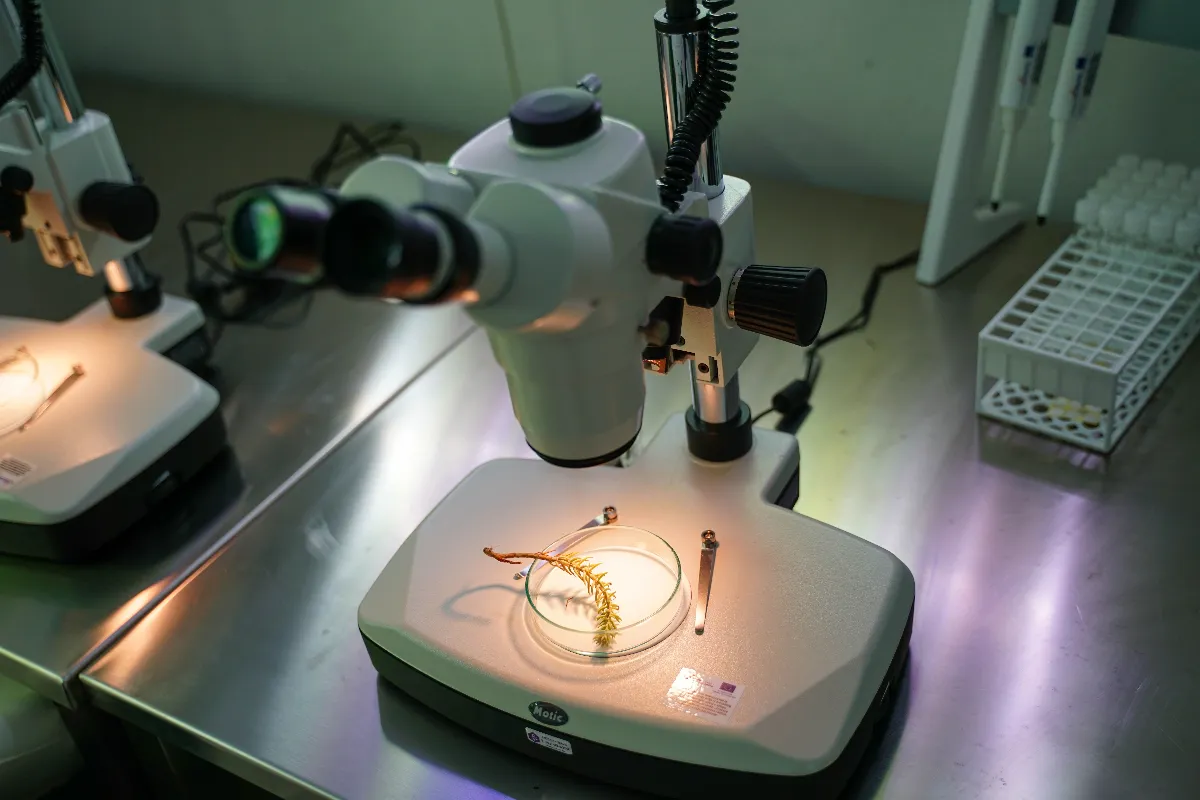
Anthropic has quietly built a wet lab, a facility for physical experiments, in the San Francisco Bay Area, moving its biology work past computer simulations. The company wants to unlock treatments for rare diseases the pharmaceutical industry has largely ignored.
The timing is the strange part. Anthropic confirmed the lab just two weeks after its own researchers warned that AI could contribute to human extinction and reported that its systems could theoretically help with biological weapons development, warnings some scientists called overblown. The company is also gearing up for a roughly $2 trillion IPO. Life sciences head Eric Kauderer-Abrams insists the two goals aren't in tension: "We're always balancing these things, making models better in ways that we think will uplift and accelerate developing medicines, and being thoughtful and careful about how we deploy it to limit the risk." A spokesperson later added, without elaborating, that the lab isn't for drug discovery specifically.
The company is chasing "undruggable" conditions using bispecific and trispecific antibodies, molecules that hit multiple targets at once, after buying startup Coefficient Bio for about $400 million in stock and adding Novartis CEO Vas Narasimhan to its board. Its August-launched Model Hardware Standard lets Claude direct lab robots directly, and Anthropic is now hiring procurement leads and protein specialists, while stopping short of running its own clinical trials so it doesn't compete with the pharma companies, Genentech, Bristol Myers Squibb, Novo Nordisk, that already buy its AI tools.
Why it matters: the same weeks Anthropic is warning the world that AI could be catastrophically dangerous, it's also building the physical infrastructure to make AI a hands-on part of inventing medicine, a bet that its safety concerns and its business ambitions can be managed side by side.
Source: Reuters