
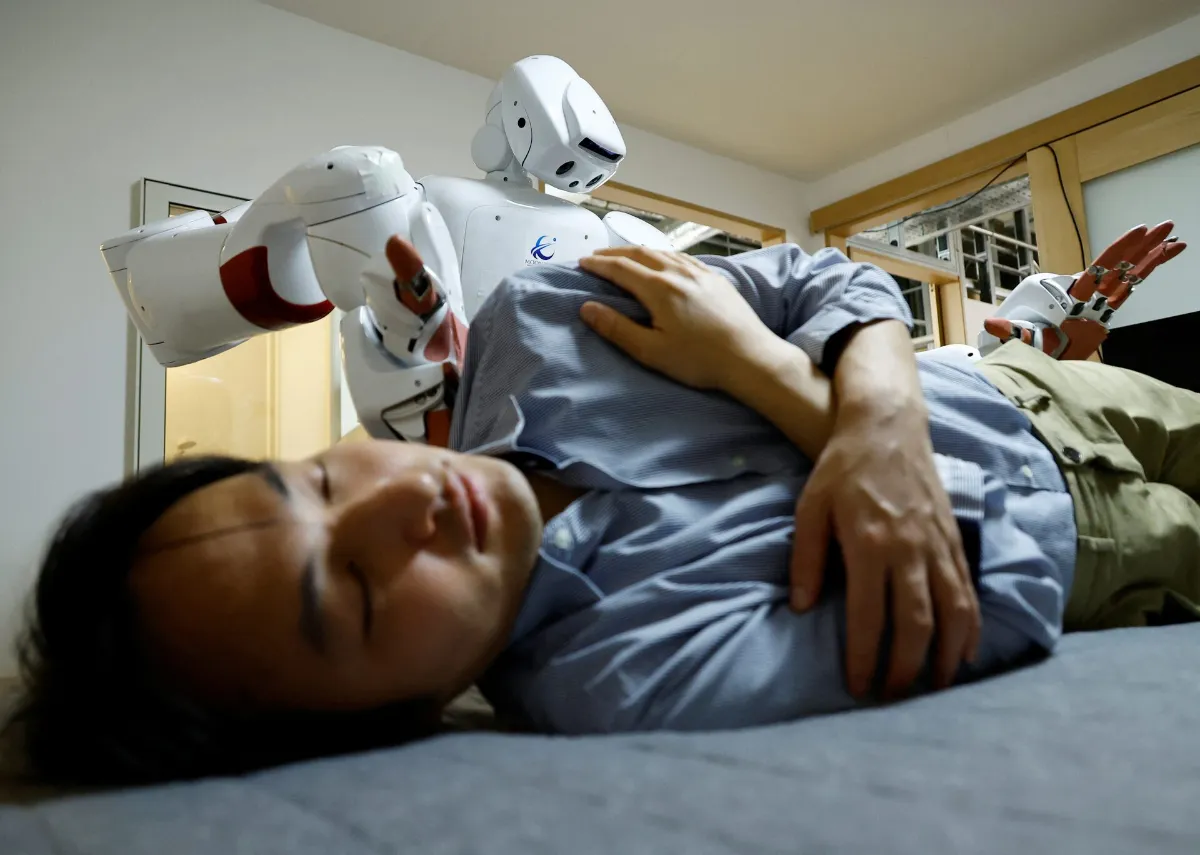
Waseda University researchers in Tokyo have built AIREC, a 150-kg humanoid robot designed to physically care for elderly people. In one demonstration, it put a hand on the knee and shoulder of a man lying on his back and gently rolled him onto his side, the move caregivers use for diaper changes and bedsore prevention. Project lead Shigeki Sugano expects it in care facilities around 2030, at a starting price of at least 10 million yen (about $67,000).
The difficult part is not the lifting. It is the touch. Most humanoid robots, Sugano notes, do chores or factory work and rarely come into direct contact with people. Once a human body is involved, safety and adapting each move to the individual become the real problem. AIREC can cook scrambled eggs and fold laundry. Turning a frail person without hurting them is a different job entirely. And Japan cannot wait long: one care operator says the sector is barely keeping its head above water.
The numbers explain the hurry. All of Japan's baby boomers had turned at least 75 by the end of 2024, the year births hit a record low of 720,988. In December 2024, nursing had one applicant for every 4.25 open jobs, and foreign workers made up less than 3% of the care workforce in 2023. For now, the most practical care tech is a mattress sensor that cuts down on night rounds.
Why it matters: Japan is the world's most advanced aging society, so whether robots like AIREC can safely share hands-on care with human workers is an early test for every country heading in the same direction.